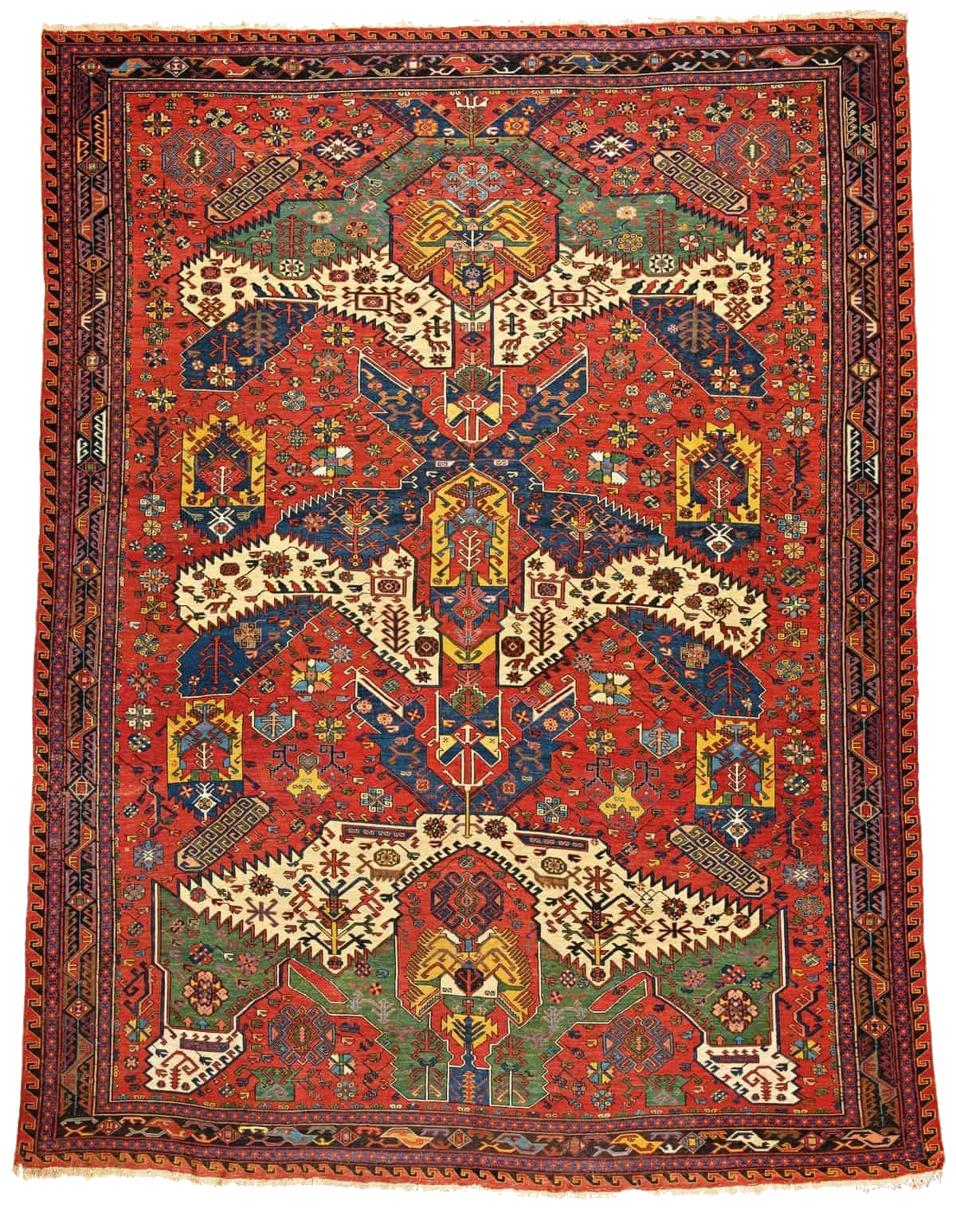
Begin with the room
Measure the space and sketch the furniture arrangement before choosing a rug. Mark a possible footprint with painter’s tape and consider door clearance, walkways, and how the room connects to neighbouring spaces. Decide whether the rug should bring a quiet foundation, a strong graphic pattern, or the room’s main source of colour.
Look beyond a photograph
Ask for overall photographs, close-ups, the reverse, and details of ends and edges. Colours can change with lighting, screens, and the direction of the pile. Dimensions may be approximate and handmade rugs need not be perfectly rectangular. Request condition notes and the measurements that matter to your placement.
Material & construction
Wool is valued for resilience and a varied, inviting surface. Silk can give a finer drawing and a distinctive sheen, but needs more considered placement and care. Cotton often forms a foundation. Hand-knotted, flatwoven, tufted, and machine-woven rugs are different constructions; ask which you are considering rather than assuming that all patterned rugs are made alike.
Condition, value & the final decision
Wear and repair are not automatically disqualifying in an old textile, but they should be understood. Ask about pile loss, reweaving, foundation damage, and any known treatments. Price reflects more than age or knot density: design, quality, rarity, condition, and provenance all play a part. Confirm shipping, taxes, payment, and any return or approval terms before committing.