A practical art
Rugs developed as furnishings that brought warmth, comfort, and decoration to daily life. Their histories cross households, pastoral communities, workshops, courts, and international trade. The ancient Pazyryk carpet, preserved in a burial mound in the Altai Mountains, is among the oldest surviving knotted carpets; it does not mark the beginning of weaving itself.
Persian weaving traditions
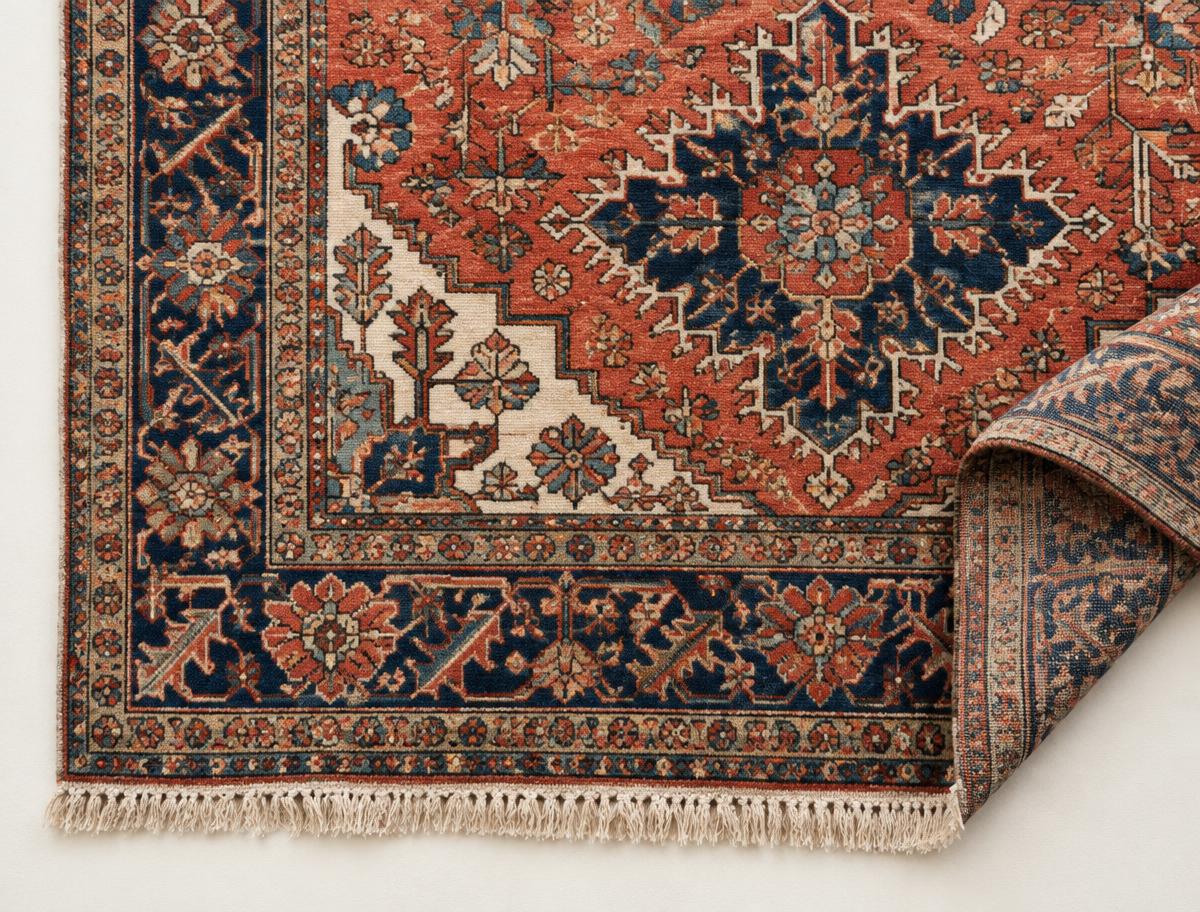
Persian rugs include both finely drawn workshop pieces and expressive village textiles. Tabriz and Isfahan are associated with sophisticated workshop production, while the Heriz district is widely admired for bold geometric drawing. These distinctions are useful context, but designs, materials, and production have changed over time and moved between regions.
The Caucasus, Anatolia & beyond
Caucasian weaving is often associated with strong geometry and rhythmic borders; Anatolian traditions range from richly coloured village rugs to grand decorative carpets. Central Asian, Chinese, Indian, and North African weaving each encompass many communities and periods. No region can be reduced to a single motif or palette.
Names, motifs & attribution
A rug’s commercial name may refer to a town, district, community, workshop, or trading centre rather than its exact place of manufacture. Motifs travel and change, so their meanings should not be treated as universal. Dating and attribution require comparison of design, structure, materials, and provenance; a name alone cannot authenticate a piece.