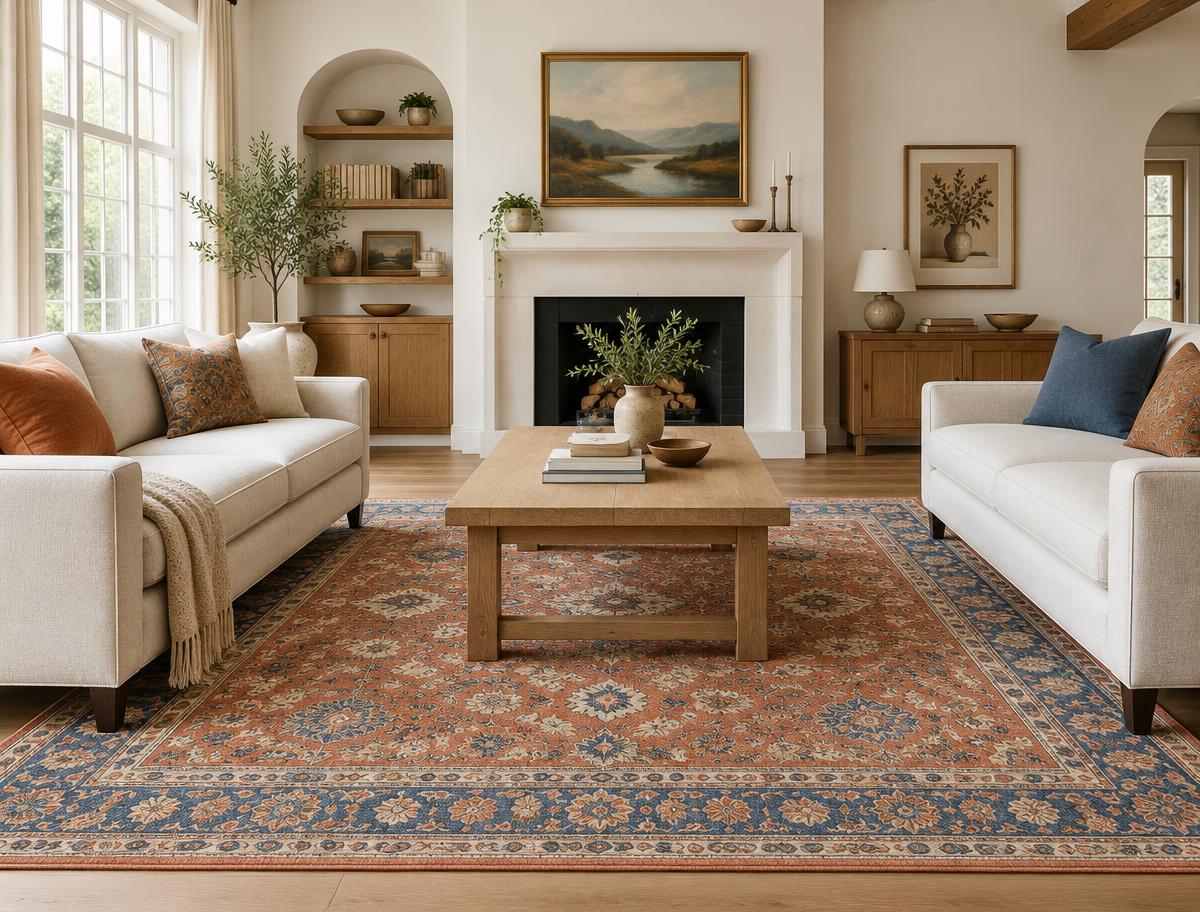
Measure the arrangement, not just the room
Measure the furniture group and the clear space around it. Mark the rug’s outline on the floor and live with that outline before choosing. Leave a deliberate margin of visible floor where practical, while allowing doors to open freely and keeping circulation comfortable. Treat common sizing rules as starting points rather than rigid requirements.
Living rooms
A rug often works well when the front legs of the main seating sit on it, bringing the group together. In a larger room, all furniture legs on the rug can create a more generous island of seating. A smaller rug can be intentional, but avoid a footprint that leaves a coffee table stranded between disconnected sofas.
Dining rooms
Allow enough rug beyond the table for chairs to stay on it when pulled out. Around 24–30 inches on each side is a useful starting point, but test it with your actual chairs. Lower pile can make chair movement easier. Consider spills, frequency of use, and fibre suitability before placing a delicate textile beneath a dining table.
Bedrooms, runners & handmade dimensions
In a bedroom, place the rug where feet land when getting out of bed; a large piece can extend beneath the lower portion of the bed, or smaller rugs can work alongside it. Runners should leave clear margins and avoid obstructing doors. Handmade rugs can vary along their edges, so confirm actual dimensions and include fringe where clearance is tight.